We've been building in New York City for a long time. Long enough to have opinions. We put this together as a quarterly deep dive from a builder's perspective — part insight, part entertainment. We're glad you're here.
Most of what we build is restaurants, cafes, boutique retail and hospitality spaces, where tile takes more abuse than any bathroom at home. The lessons below hold up in both.

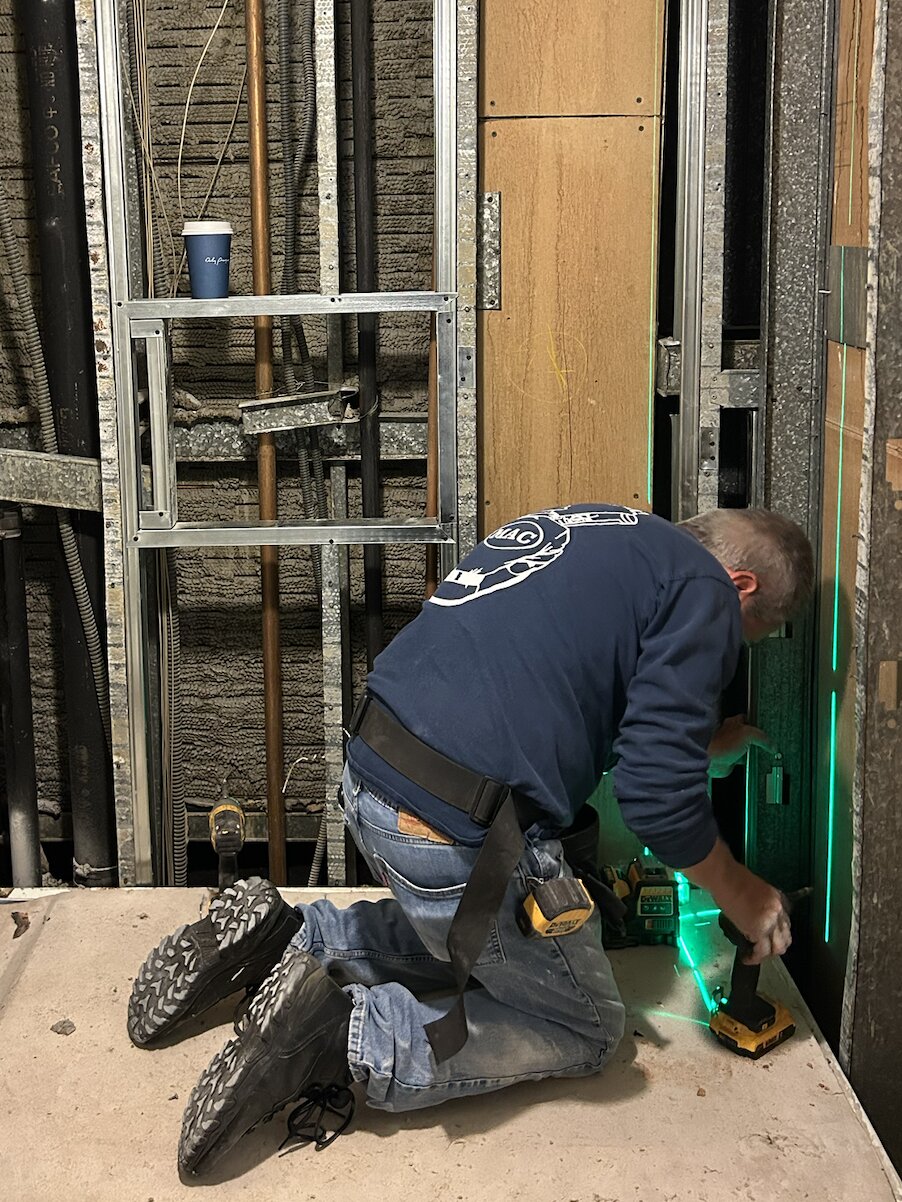
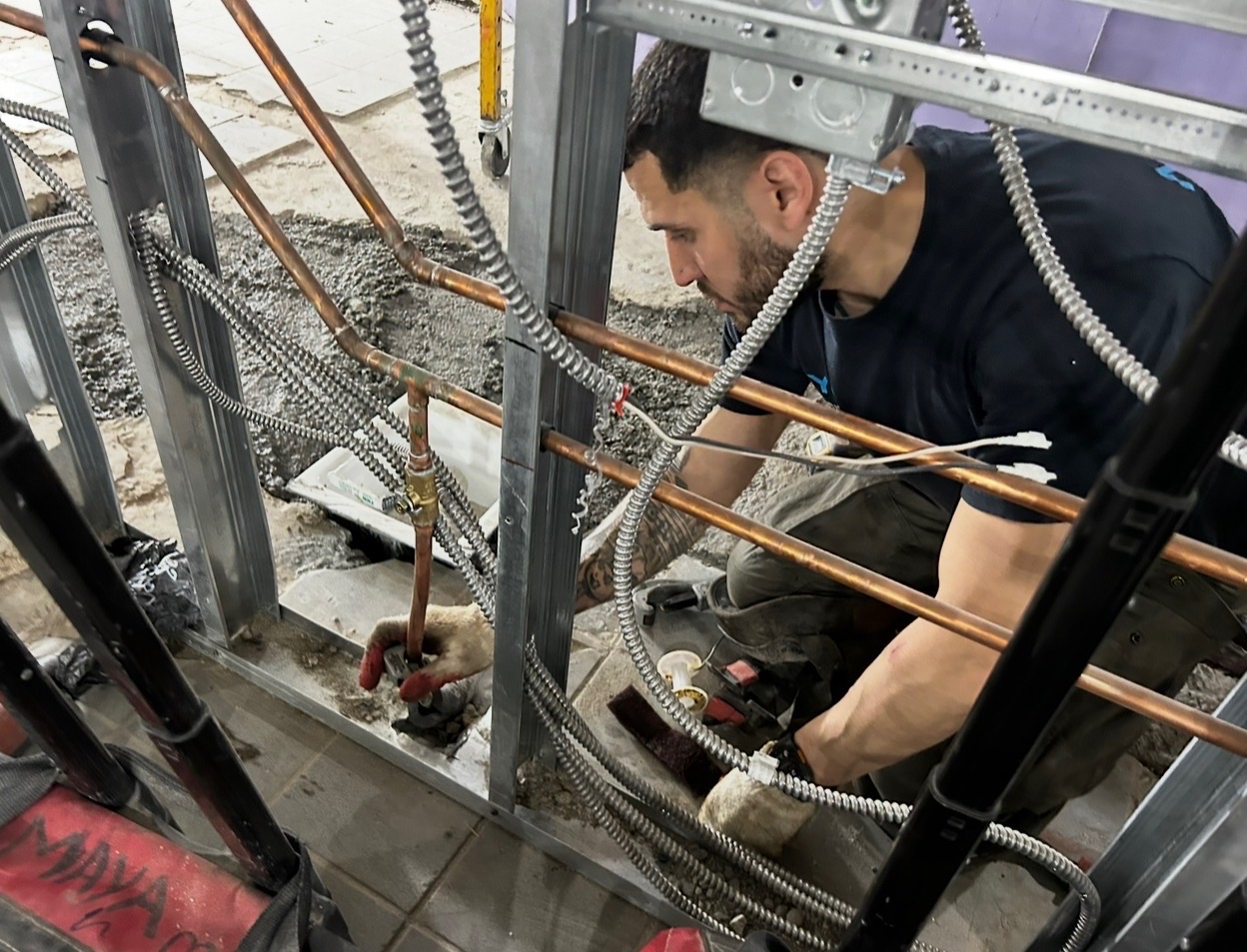
Current projects: restaurant, retail and residential renovations in Manhattan and Brooklyn, 2026
Building Notes
Four Modest Proposals
Things we keep thinking about. Things that matter on a job site.
№ 01
De-Schluterfly
Tile-edge trim — aka Schluter — has overtaken America's bathrooms. Gone are the bullnose, pencil liner, quarter-rounds, and corner pieces that made tiled walls feel elegant. Now so many new bathrooms look like a LaGuardia concourse with metal strips everywhere.
Let's bring back complete tile systems. Or maybe just ask your tile setter to specify mitered corners.
In hospitality restrooms and boutique retail, where every detail is part of the brand, a mitered corner or a bullnose reads as craft, and a metal strip reads as a shortcut. Where tile meets millwork, at a bar die, a banquette base or a vanity, a clean transition takes coordination between the tile setter and the millwork shop.
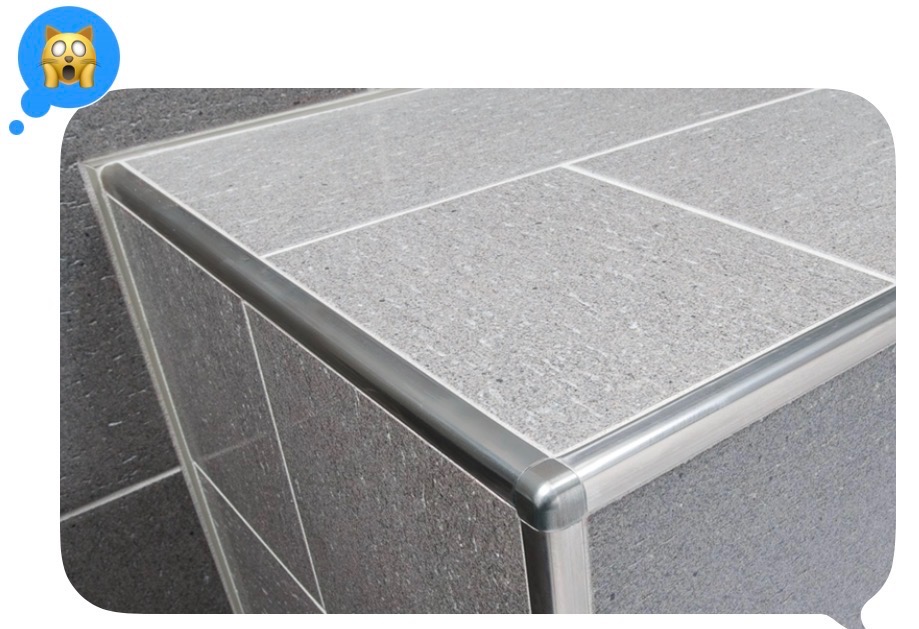
The case for bringing back the bullnose.
№ 02
Steal Focus Less
Walk through Rome or Porto. Centuries-old tile, local sand and lime grout, completely invisible. The tile was the thing — the grout just held it together.
Then Mapei and Laticrete arrived with hundreds of grout color options and suddenly what was a background material became a complicated design decision and a possible dilemma.
When in doubt: keep the joints tight and the grout gray.

Grout color is a design decision. Treat it like one.
№ 03
Cry Once
Standard grout works fine. Epoxy grout costs roughly 3× more in material and labor — it doesn't stain, doesn't crack, and doesn't require sealing. Which is why it gets value-engineered out of most budgets. Fair.
But here's the math: epoxy grout lasts dramatically longer with zero maintenance. Standard grout, in a high-traffic bathroom, will need regrouting inside of a decade. The cheaper option can look expensive in hindsight.
In a restaurant kitchen it isn't a luxury. Grease, sanitizers and daily hose-downs break down cement grout fast, so most commercial restaurant contractors spec epoxy in the kitchen and behind the bar from day one. The real question in a restaurant renovation is whether it goes into the front-of-house restrooms too.
Our advice: if it's a wet, high-traffic area, spend once on epoxy.
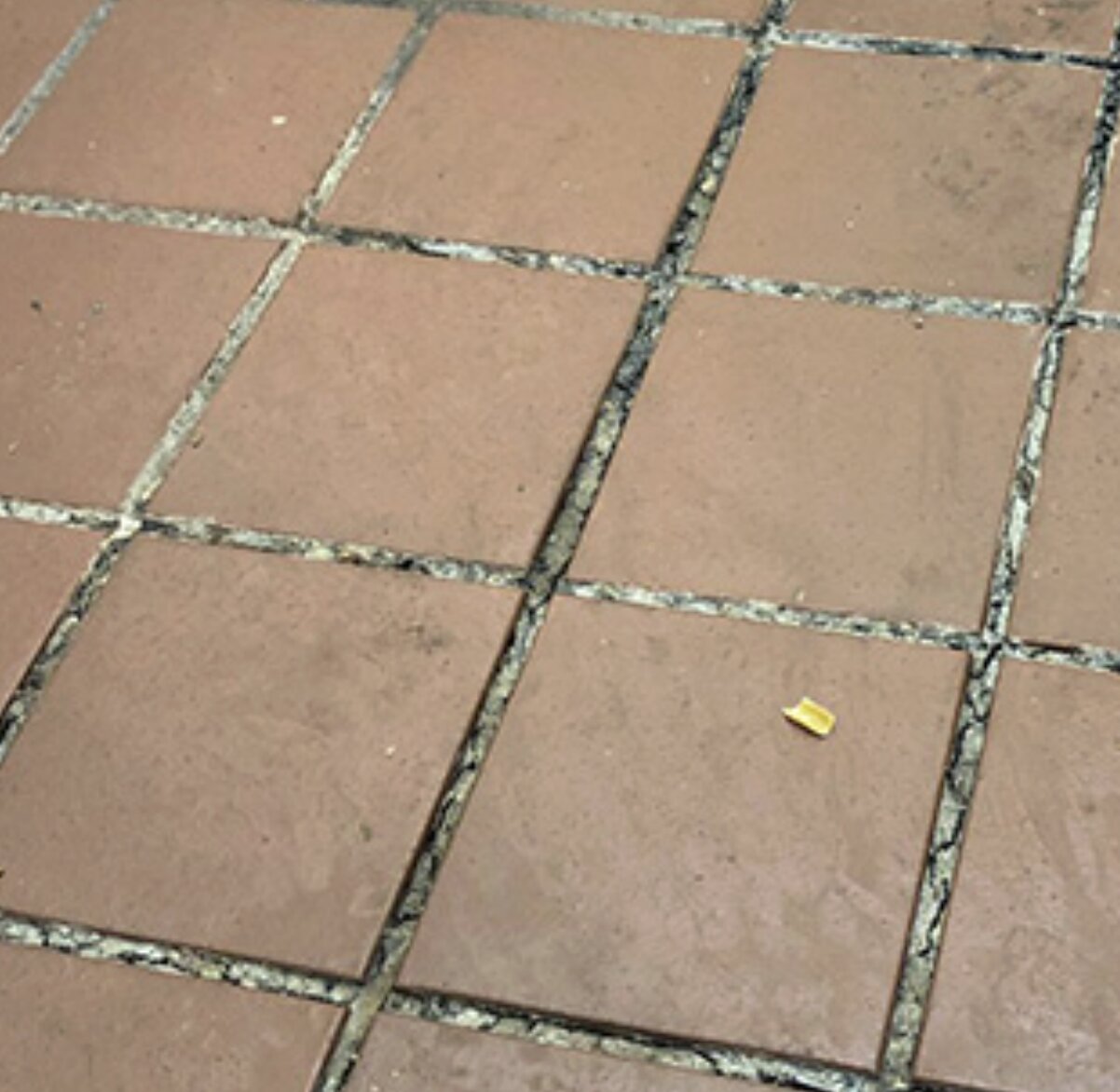
Epoxy grout: more upfront, less everything else.
№ 04
Tile Ain't It
Tile and grout aren't the end of the story. They're not waterproofing — water finds every grout crack, corner, and penetration and works its way through.
A continuous waterproofing membrane under the tile is non-negotiable in any wet area. Most problems we see in bathroom renovations trace back to this step being skipped or done poorly. The stakes are higher in commercial work: a restaurant kitchen over an occupied cellar, or hotel bathrooms stacked floor over floor. A failed membrane there means a closed dining room or guest rooms out of service, which is why hospitality renovation general contractors flood-test every wet area before tile. And in New York, water finds its way in from below, too. It's not glamorous, you won't see it, and it will never come up in conversation.
Best practice: flood-test before your beautiful tile goes down.
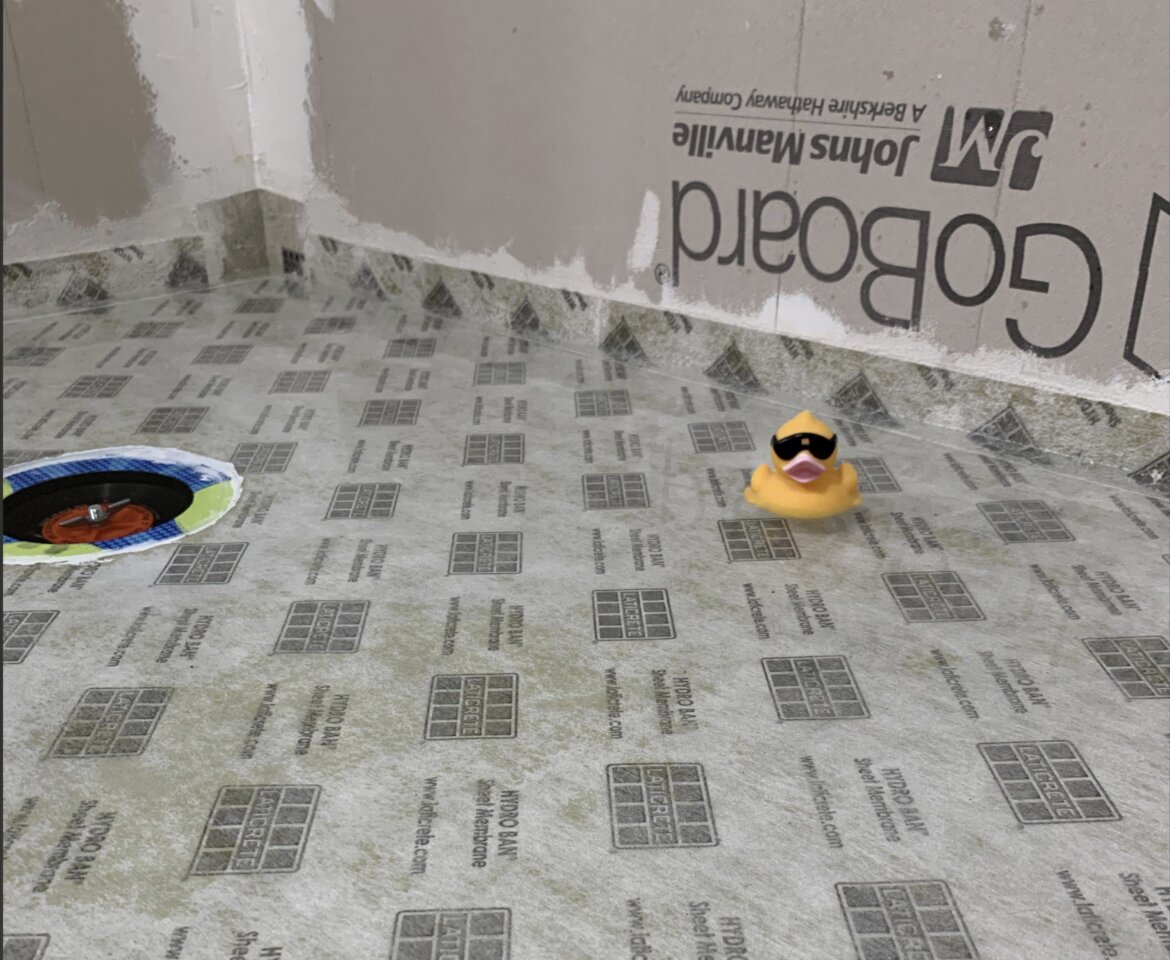
The thing no one sees is doing the most work.
"The tile is what you see. The membrane is what protects it. Do both right, and no one ever has to talk about the bathroom again."
— Ted Kilcommons, RAMP Contractors
Foot Notes
Still here?!? 😊 ...Links for the Tile-Obsessed
Chifoumi Studio Mosaïque
@chifoumistudioMostly Paris commercial. Designing and fabricating some of the best modern mosaic work around — the kind that makes you stop walking and take a photo.
Atelier de Knock
@atelierdeknockHandmade tile work with a restraint that's increasingly rare. Worth following even if you never order anything.
Kachelofen
@kachelofenartCeramic masonry heaters — the original radiant heat, predating forced air by centuries. Impractical for most New York apartments. Spectacular everywhere else.
Ready to build something?
Planning a restaurant renovation, retail build-out or storefront renovation in Manhattan or Brooklyn? RAMP is a commercial general contractor for design-driven restaurant, hospitality and retail projects. Let's talk.
Let's Build!