The days are getting shorter, so it's a good time to talk all things lights. The techniques that set the stage in theaters and the mood in hotels are now very much within reach for your home, restaurant or store. As a restaurant renovation contractor and retail builder in Manhattan and Brooklyn, we wire for them on nearly every commercial job now.
One of the most important of these technologies is called DMX. So of course we're borrowing the late rapper's swagger for this equally self-assured Building Notes: a practical guide to what today's lighting can do for your space, and what has to be planned before rough-in. Enjoy.
Listen along: The DMX Remix Playlist
Building Notes · Vol. 03
Modern Lighting, Explained
Six tracks on LED, 0-10V and DMX for restaurant, retail, hospitality and storefront renovations.
Track 01
"Who We Be"
What's Inside an Ordinary Wall?
Open up an ordinary wall and you'll find three wires: black, white, green. Hot, neutral, ground. Anything fancier, like dimming, color or scenes, needs wiring that gets planned and pulled before the drywall goes up.
In a tenant improvement build-out, this is the moment to decide. Once the walls close, adding control wiring gets expensive.
Track 02
"Slippin'"
What Happened to Incandescent and Halogen?
For a century, those three wires were all your lights needed. Incandescent bulbs dimmed beautifully and cast a flattering glow, but burned through energy like a campfire. In the '90s, low-voltage halogen track and recessed lights brought greater energy efficiency. Then came federal efficiency rules in 2023, making LED the standard in interior lighting.
Track 03
"What's My Name?"
What Do LED Drivers Do, and Where Do They Go?
LEDs use little energy and last thousands of hours. And they've come a long way, now offering warm, flattering light that sets the mood and lights the task at hand. They need a driver to convert power (AC to DC) from the building's three-wire supply. Like halogen transformers, drivers can be built in, but often they must be installed remotely. Know which type of LED fixture you're buying and plan accordingly before work starts.
In retail and restaurant work, remote drivers often end up inside the millwork: display cases, backlit shelving, bar dies. Your millwork shop needs to know where they go, with access panels and ventilation built in. Get the electrician and the millwork contractor coordinated before shop drawings are approved.
Track 04
"Get at Me Dog"
What Is 0-10V Dimming?
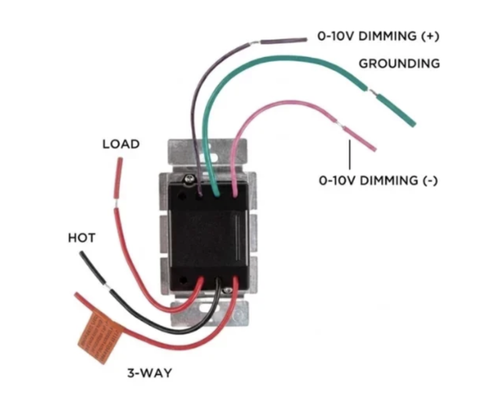
If you want more than on/off control of your LEDs, get to know 0-10V dimming to avoid flickering and drop-outs. Standard practice for general contractors in commercial buildings and on high-end projects, it adds two low-voltage control wires alongside hot, neutral and ground to adjust LED brightness. It's what commercial restaurant contractors typically specify for dining rooms, and today's 0-10V drivers can dim smoothly all the way down to 0.01%.
Pro Tip
Using 0-10V fixtures and dimmers? Make sure your electrician runs the extra control wires from the dimmer to each fixture. Adding them later means delays and holes in the walls.
Track 05
"Party Up (Up in Here)"
What Is DMX Lighting Control?
While 0-10V adjusts brightness, the fast-advancing DMX control protocol goes further, controlling compatible LED fixtures' color, color temperature and effects. Born in stage lighting, it now lets you combine these settings into scenes and schedule them from a wall-mounted controller. It's a versatile, increasingly affordable technology with plenty of plug-and-play options.
In a hospitality renovation, it sets the room from lunch service to late-night bar. In a storefront renovation, it can change window lighting by season, time of day or product launch.
Track 06
"Stop, Drop, Shut 'Em Down"
Why Do LED Lights Flicker When Dimmed?
If your lights flicker, strobe or drop out when dimmed, here are the usual culprits:
-
Mismatched drivers and dimmers
Bad pairings flicker, buzz or give up at the low end. Check the driver maker's compatibility list before you buy dimmers.
-
Runs that are too long
Voltage drop dims the far end and can shift the color. Respect max run lengths from dimmer to fixture.
-
Missing control wires
0-10V or DMX control wiring has to be pulled during the electrician's rough-in. Plan it in design. Adding it later can mean opening finished walls.
-
Push-in and twist-on connectors
These can loosen over time and cause drop-outs. Use lever-style connectors or properly torque all terminals.
-
Heavy loads on the same panel
HVAC, electric tankless water heaters and commercial kitchen equipment can cause voltage sags that show up as flicker in your beautiful new lights. In a restaurant renovation, keep lighting on circuits separate from kitchen equipment.
"Where My Dogs At?!?"
Planning a restaurant, retail or storefront renovation? Talk to us before rough-in →
Foot Notes
Still here?!? 😊 ...More Building Notes
Vol. 02 — NYC's Flooding Sewer System
Read it hereSeven flood questions answered for restaurant, retail and building owners: backflow valves, floor drains, cellars and what your lease should cover.
Vol. 01 — So Far, So Good: A Builder's Take on Tile
Read it hereSchluter trim, grout color, when epoxy pays off, and why the waterproofing you never see matters more than the tile. Same lesson as lighting: plan the invisible part first.
The DMX Remix Playlist
YouTubeEvery track title in this issue, in order. Best enjoyed with the dimmer at about 30%.
Ready to build something?
Planning a restaurant renovation, retail build-out or storefront renovation in Manhattan or Brooklyn? RAMP is a commercial general contractor for design-driven restaurant, hospitality and retail projects. Let's talk.
Let's Build!